In today’s complex and regulated world, organisations across every sector face increasing pressure to demonstrate competence, ensure safety, and uphold the highest standards. Two seemingly disparate, yet fundamentally crucial, qualifications play a significant role in achieving these goals: the Level 4 Award in Internal Quality Assurance (IQA) Course and the Level 3 Award in Emergency First Aid at Work (EFAW) Course. While one focuses on the systemic review of training and assessment, and the other on immediate life-saving skills, both are pillars of a responsible, effective, and safe organisational environment.
The Guardian of Standards: Level 4 Award in Internal Quality Assurance (IQA)
For any organisation involved in delivering training, assessing competence, or awarding qualifications – from colleges and training providers to large corporations with in-house training departments – the quality of assessment is paramount. This is where the Level 4 Award in Internal Quality Assurance (IQA) steps in.
The IQA qualification is designed for individuals who are responsible for ensuring the quality of assessment processes and decisions within an organisation. It’s about much more than just checking boxes; it’s about safeguarding the integrity of qualifications, ensuring fairness for learners, and continuously improving the assessment experience.
What Does IQA Involve?
The IQA award typically covers two main units:
- Understanding the Principles and Practices of Internally Assuring the Quality of Assessment: This foundational unit delves into the theoretical underpinnings of IQA. Learners explore the roles and responsibilities of an IQA, the regulatory requirements, ethical considerations, and the various approaches to quality assurance. It covers planning IQA activities, managing information, and understanding the importance of standardisation.
- Internally Assure the Quality of Assessment: This is the practical application unit. Learners must demonstrate their ability to plan, conduct, and evaluate internal quality assurance activities for at least two assessors assessing a minimum of two learners each. This involves:
- Sampling assessment records: Reviewing assessment decisions to ensure they are consistent, fair, and meet the required standards.
- Observing assessors: Watching assessors in action to evaluate their practice and provide constructive feedback.
- Standardisation meetings: Facilitating or participating in meetings to ensure all assessors are interpreting and applying assessment criteria consistently.
- Providing support and guidance: Mentoring assessors, identifying areas for development, and offering solutions to improve their practice.
- Reporting and record-keeping: Documenting IQA activities and outcomes, and making recommendations for improvement.
Why is IQA Critical?
- Maintains Credibility: It ensures that qualifications awarded are robust and respected, enhancing the reputation of the organisation.
- Ensures Fairness: IQA protects learners by ensuring assessment decisions are fair, unbiased, and consistent across all assessors.
- Drives Improvement: Through systematic review and feedback, IQA identifies areas where assessment processes or assessor practice can be enhanced.
- Meets Regulatory Requirements: For many accredited qualifications, having qualified IQAs is a mandatory requirement from awarding bodies.
- Risk Mitigation: It helps prevent issues such as malpractice, maladministration, and appeals by ensuring quality at every stage.
The Frontline of Safety: Level 3 Award in Emergency First Aid at Work (EFAW)
Switching gears from quality systems to immediate personal safety, the Level 3 Award in Emergency First Aid at Work (EFAW) is a qualification that no responsible organisation should be without. While the IQA focuses on the ‘how’ of education, EFAW focuses on the ‘how to respond’ in a crisis.
The EFAW course provides individuals with the essential skills and knowledge to administer immediate, life-saving first aid in a workplace emergency. It is a fundamental requirement for many workplaces to have a sufficient number of trained first aiders to comply with health and safety regulations.
What Does EFAW Cover?
The EFAW course is typically a one-day programme that covers critical topics, including:
- Roles and responsibilities of a first aider: Understanding their duties, accident reporting, and when to call emergency services.
- Assessing an incident: Performing a scene survey and primary survey (DRSABC – Danger, Response, Shout, Airway, Breathing, Circulation).
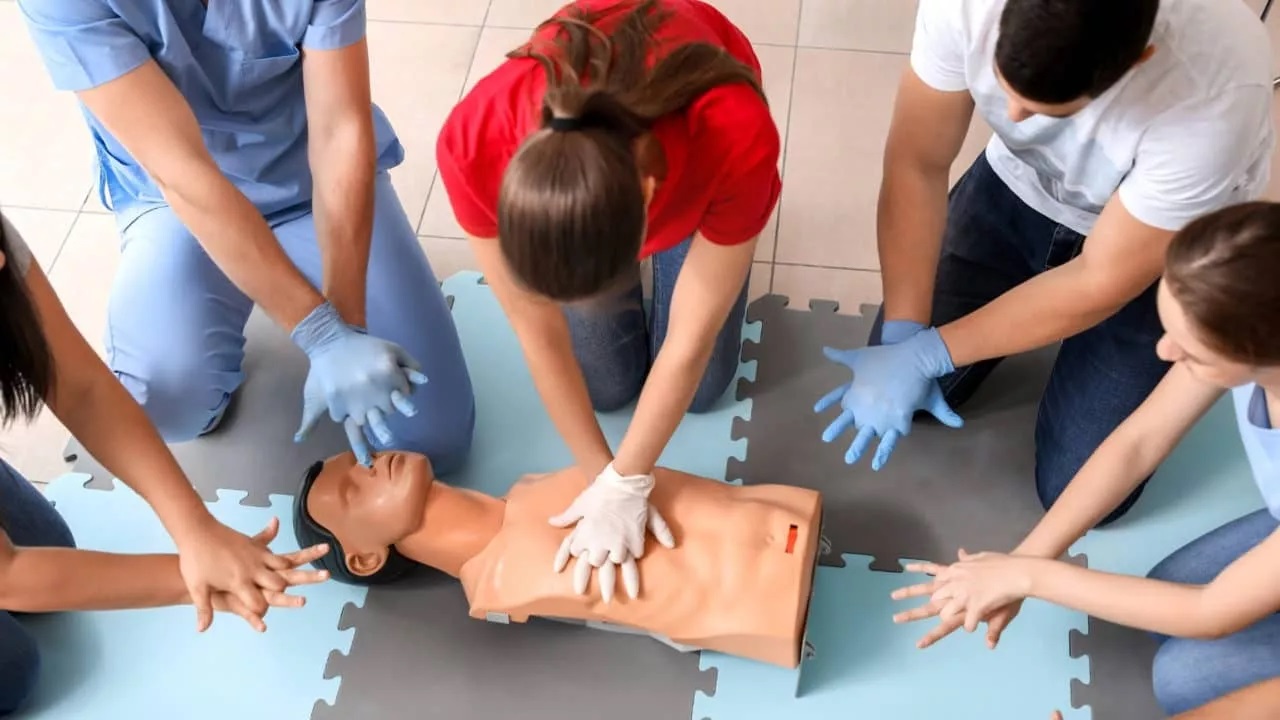
- Managing an unresponsive casualty: How to deal with someone who is not breathing (CPR and use of a defibrillator) and someone who is breathing (recovery position).
- Choking: Recognising and treating a choking casualty.
- Wounds and bleeding: Controlling severe bleeding and managing shock.
- Minor injuries: Dealing with small cuts, grazes, bruises, and minor burns.
Why is EFAW Indispensable?
- Saves Lives: This is the most critical benefit. Prompt and correct first aid can make the difference between life and death or significantly reduce the severity of an injury.
- Legal Compliance: The Health and Safety (First-Aid) Regulations 1981 require employers to provide adequate and appropriate first-aid provision in their workplaces. EFAW helps meet this requirement.
- Reduces Severity of Injuries: Even for non-life-threatening incidents, immediate first aid can prevent a condition from worsening and aid quicker recovery.
- Boosts Staff Morale and Confidence: Knowing that trained first aiders are present creates a safer working environment and boosts employee confidence.
- Promotes a Culture of Safety: Investing in EFAW training demonstrates an organisation’s commitment to the well-being of its employees and visitors.
A Holistic Approach to Excellence
While the Level 4 IQA and Level 3 EFAW qualifications serve different functions, together they represent a holistic approach to organisational excellence and responsibility. The IQA ensures that the learning and development within an organisation are credible and continuously improving, fostering a skilled workforce. The EFAW ensures that this skilled workforce, and anyone interacting with the organisation, is safe and cared for in an emergency.
Investing in both IQA and EFAW is not just about compliance; it’s about building a robust, reputable, and resilient organisation that values both the quality of its output and the safety of its people. They are cornerstones of a truly professional and responsible enterprise.

